
Finding Stability Through Storytelling During Family Transitions
Navigating a separation requires patience and a new way of communicating. Discover how personalized narratives provide the consistency your child needs to feel secure.
Bridging the gap with narrative
When a family structure changes, adults often feel the urge to explain the 'why' behind the separation. We offer logistical details, reassurances, or legal explanations, hoping to provide clarity. Yet, for a young child, these adult-level explanations often fall short. A child’s brain is not yet structured to process abstract concepts or complex social shifts. Instead, they process the world through connection, rhythm, and the predictable arc of a story.
The power of a shared narrative
Helping kids cope with divorce is rarely about providing the right facts; it is about providing a sense of order. When the physical world feels like it is shifting, a story can act as a container for those big, confusing feelings. By turning the new reality into a narrative, you give your child a map they can revisit whenever they feel overwhelmed.
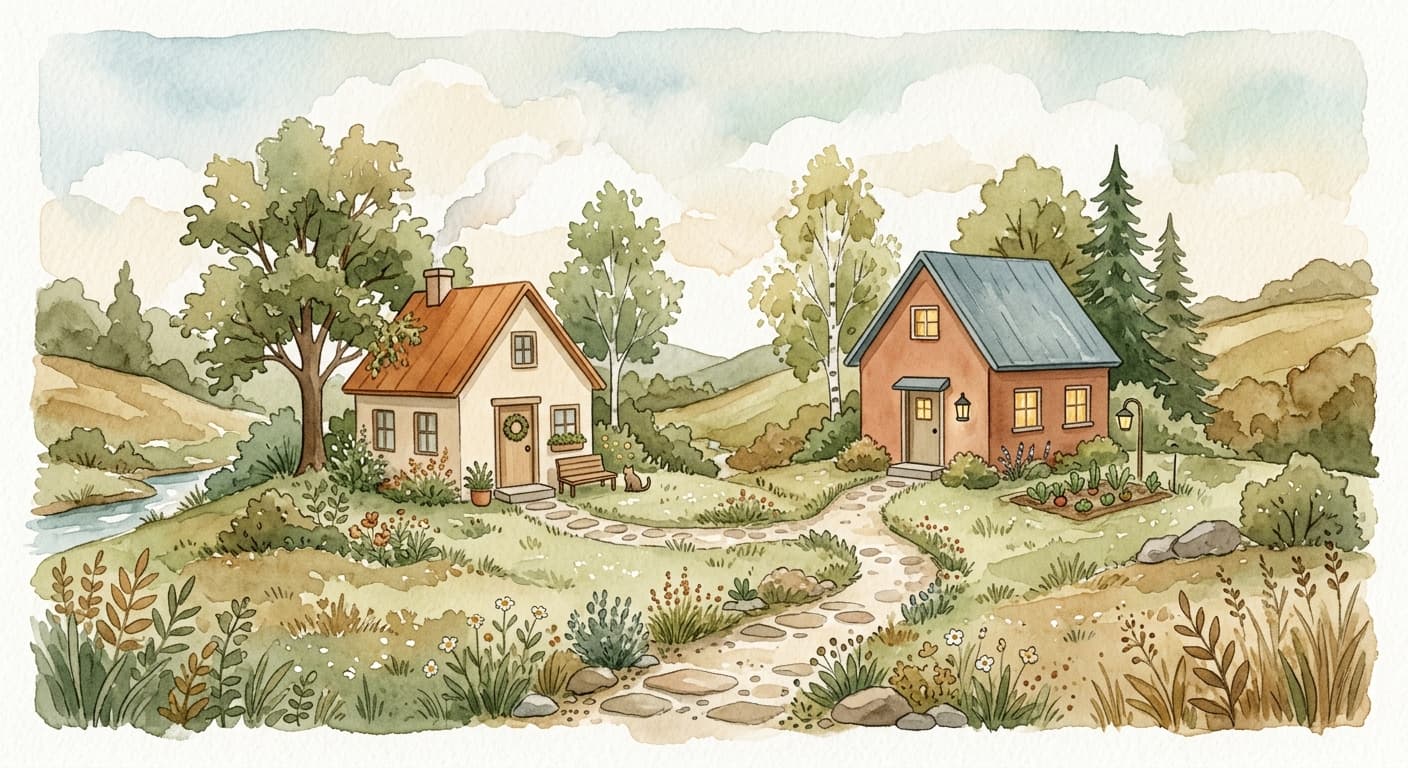
A personalized story about two homes for kids allows them to see their own routine reflected back at them. When they see a character navigating the transition between two living spaces, it demystifies the process. It transforms a vague, scary uncertainty into a concrete sequence of events: packing a bag, traveling, and arriving at a place where they are loved and expected.
Creating a touchstone for stability
A book about when parents split up for kids serves as a gentle touchstone. It is a tool that remains constant even when the environment changes. By reading this story together, you create a shared language for the new routine.
Consider the following ways to use narrative tools during this time:
- Use a social story two homes for kids to visualize the transition. Seeing the steps of the day illustrated can lower anxiety before it begins.
- Keep the story simple and focused on the child’s perspective. What do they need to know about their toys, their bed, and their time with each parent?
- Use the story as a bridge. Reading the same book in both homes provides a sense of continuity that helps the child feel that they belong in both places.
Looking toward the future
As you move forward, you may eventually navigate the nuances of blended family adjustment. This is another stage where stories remain invaluable. Whether you are introducing new family members or establishing new traditions, a personalized book can help your child process these shifts at their own pace.
By grounding your child in a predictable, warm narrative, you are not just explaining a change. You are reinforcing the idea that while the structure of the family may be evolving, the love and stability surrounding them remain the foundation of their world. Take your time, lean into the bedtime ritual, and let the story do the heavy lifting of reassuring your child that they are safe, seen, and supported.
Превратите такие идеи в следующую историю для вашего ребёнка
Smart Storytime создаёт персонализированные книги для нужного возраста, в центре которых — ваш ребёнок. Попробуйте одну книгу или откройте безлимитное чтение с подпиской.