
When Words Hurt: How Stories Help Children Navigate Social Challenges
Discover why narrative storytelling is a more effective bridge to your child's emotional world than adult lectures when navigating tough playground dynamics.
Moving beyond the lecture
When a child comes home with news of a social struggle, our first instinct as parents is often to provide a logical explanation. We offer advice, explain the importance of kindness, and define why certain behaviors are unacceptable. Yet, we often find that these adult-led lectures fall flat. Children do not process social dynamics through abstract logic; they process them through the safe, imaginative landscape of narrative.
The power of a story
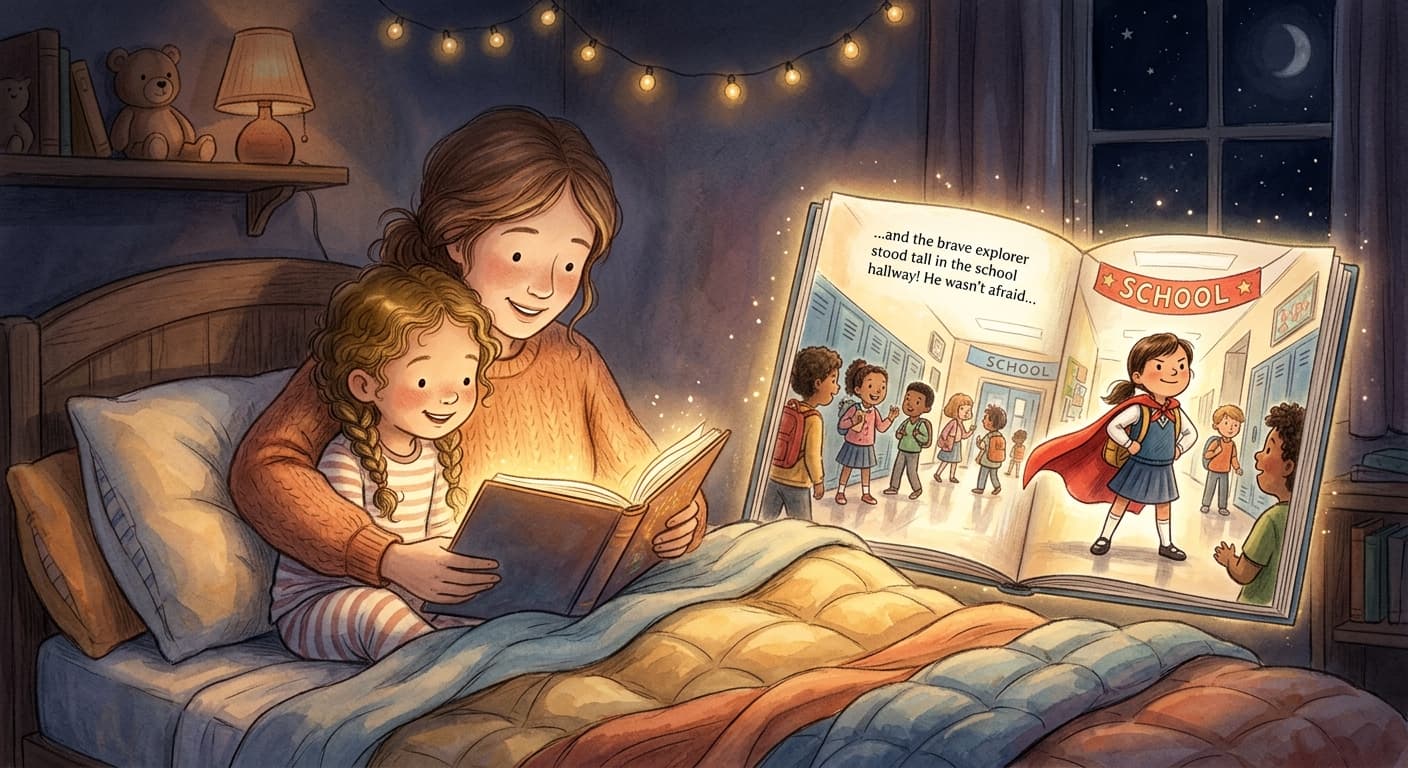
Using a bedtime story about bullying at school allows your child to explore complex emotions from a safe distance. When a child hears a story about a character facing a peer conflict, they aren't being told what to do; they are observing a journey. This distance is vital. It lowers their defenses, allowing them to absorb lessons about boundaries and self-worth without feeling the pressure of being 'taught.'
Finding the right narrative
When you look for a book about standing up to bullies for kids, prioritize stories that move away from simple 'victim versus villain' tropes. Instead, look for books that focus on the internal experience of the protagonist. A personalized story about handling bullying can be transformative because it places your child in the driver’s seat. By seeing a version of themselves navigate a difficult situation, they begin to internalize a sense of agency that a lecture simply cannot provide.
Demystifying the playground
Verbal bullying at school is particularly difficult for young children to grasp because it is often subtle or nuanced. Stories about standing up to bullies help demystify these interactions by giving them a concrete shape. When you turn an abstract, scary fear into an illustrated adventure, the situation becomes manageable.
- Name the behavior: Identify the action without labeling the peer permanently.
- Practice the script: Use the story to rehearse phrases like 'I don't like that' or 'Please stop.'
- Build empathy: Discuss how the character feels when they stand their ground, shifting the focus from the bully's power to the child's inner strength.
By engaging with these challenges through stories, you are not just helping your child survive a difficult day; you are giving them the tools to navigate the social world with confidence and grace.
Mach aus Ideen wie diesen die nächste Geschichte deines Kindes
Smart Storytime erstellt personalisierte, altersgerechte Bücher, in denen dein Kind im Mittelpunkt der Geschichte steht. Probiere ein einzelnes Buch — oder genieße unbegrenztes Lesen mit einem Plan.