
Holding Space for Big Questions About Life and Loss
When your child begins to ask about the permanence of life, it can feel overwhelming. Discover how a gentle, personalized story can turn these heavy conversations into moments of deep connection.
A natural stage of curiosity
There is a specific moment in childhood when the world shifts. Your child, perhaps while looking at a fallen leaf or noticing a gray hair, suddenly realizes that people—and pets, and even parents—do not stay forever. If you have a kid afraid of a family member dying, you are not alone. This anxiety is not a sign that something is wrong; it is a sign that your child’s cognitive world is expanding. They are beginning to understand the concept of permanence, and that realization naturally brings a sense of vulnerability.
Why stories serve as a safe container
When we try to explain the complexities of life and loss using adult logic, we often find that the words fall flat. Children do not process these abstract concepts through lectures or facts. They process them through narrative.
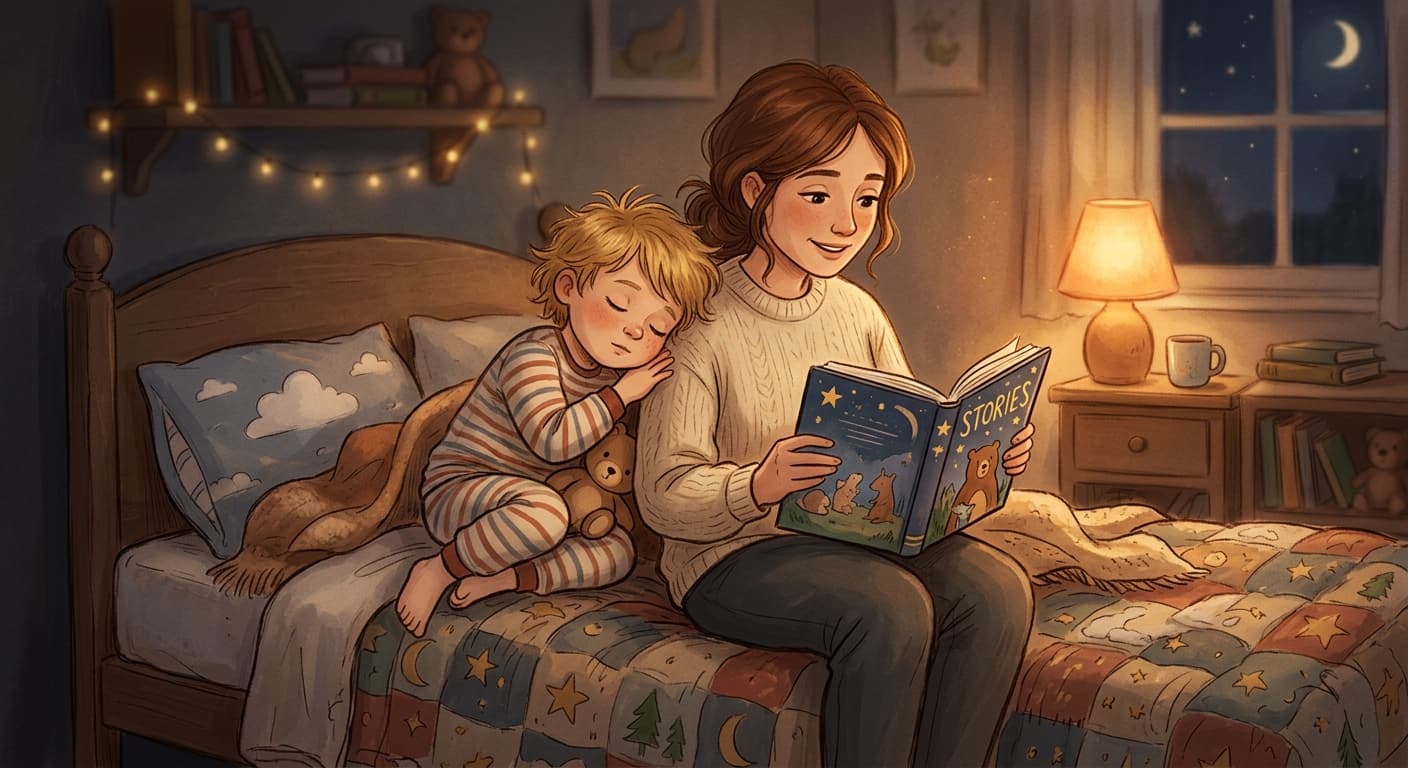
Sharing a bedtime story about when someone we love dies allows your child to explore these heavy emotions from a safe distance. In the world of the story, the characters face the same fears and questions your child is holding. This distance creates a container where they can observe their own feelings without being overwhelmed by them. It transforms an abstract, frightening concept into a tangible journey that you are taking together.
Finding the right language
When you look for a book about when someone we love dies for kids, the goal is validation rather than just information. You are not trying to "solve" their anxiety or provide a perfect philosophical answer. Instead, you are saying: I hear you, this is a big, confusing feeling, and you are not alone in it.
- Focus on feelings: Choose narratives that acknowledge the sadness, the fear, and the love that remains.
- Keep it personal: Stories that mirror your own family’s dynamics help the child feel seen in their specific context.
- Focus on connection: The most important part of the reading experience is the physical presence of you, the parent, holding them while they navigate the story.
Why books about grief for children are effective tools
Books about grief for children act as a bridge. They provide a vocabulary for the "unnameable" feelings that often manifest as nighttime restlessness or clinginess. When a character in a book experiences loss and finds a way to carry their love forward, it offers a gentle blueprint for your child to do the same.
By inviting these stories into your bedtime routine, you are teaching your child that no topic is too big to discuss. You are building a foundation of trust, showing them that even when life feels uncertain, your relationship remains a steady, constant home.
Mach aus Ideen wie diesen die nächste Geschichte deines Kindes
Smart Storytime erstellt personalisierte, altersgerechte Bücher, in denen dein Kind im Mittelpunkt der Geschichte steht. Probiere ein einzelnes Buch — oder genieße unbegrenztes Lesen mit einem Plan.