
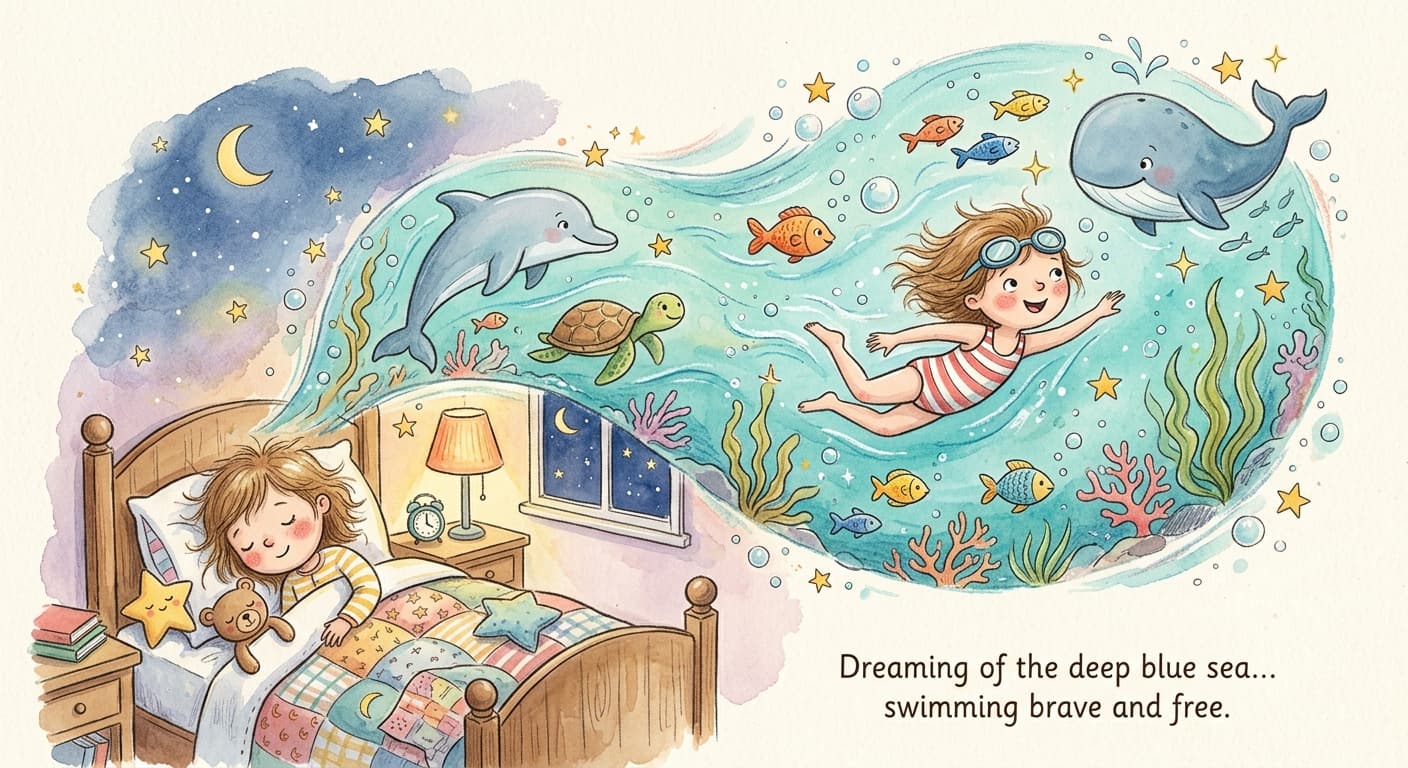
Turning Water Confidence Into a Nightly Story
When pool time feels overwhelming, a gentle story can bridge the gap between fear and curiosity. Discover how to turn water confidence into a peaceful bedtime ritual.
Why stories reach where logic cannot
When your child experiences first swim lesson tears, the instinct is often to offer logical comfort: explaining that the water is safe, that the instructor is kind, or that they are doing a great job. While well-intentioned, these adult explanations often bounce off a nervous child. Young minds are not wired for abstract logic in moments of distress; they are wired for narrative.
By creating a personalized story about being brave in the water, you move the lesson out of the high-pressure environment of the pool and into the safety of the bedroom. A story allows a child to observe a character navigating the same hesitations they feel, giving them a safe distance to process their emotions and imagine a different outcome.
Creating your custom narrative
To build an effective bedtime story about learning to swim, focus on the emotional journey rather than just the physical mechanics. Here is a step-by-step approach to crafting your narrative:
- Start with the familiar: Introduce your child’s character in a setting they know, establishing their comfort before approaching the water.
- Validate the hesitation: Acknowledge that the water can feel big, loud, or cold. Naming the feeling is the first step toward overcoming it.
- Introduce a small, brave choice: Have the character take one tiny, manageable step, such as sitting on the edge or blowing bubbles. Focus on the effort, not the end result.
- Celebrate the feeling of safety: End the story by focusing on the sensation of being held, being supported, or simply being proud of trying.
Making it a nightly routine
Turning a social story learning to swim into a consistent part of your evening helps normalize the experience. Consistency builds anticipation and reduces the 'unknown' factor that often fuels anxiety.
- Read the story during your established quiet time, rather than right before a swim lesson, to keep the association positive and low-pressure.
- Use the Discussion Guide included with your story to ask open-ended questions. Instead of asking 'Are you scared?', try 'How do you think [Character] felt when they touched the water?'
- Keep the book accessible. Let your child look at the illustrations during the day, which helps them process the images at their own pace.
The power of the bedtime story
A bedtime story about being brave in the water acts as a rehearsal for reality. By the time your child stands on that pool deck again, they have already 'lived' through the experience in their imagination, successfully navigated their fears, and come out the other side. This quiet, repetitive exposure is often the gentle nudge a child needs to turn tears into ripples of confidence.
حوّل أفكاراً كهذه إلى قصة طفلك القادمة
ينشئ Smart Storytime كتباً مخصصة ومناسبة لعمر طفلك، تجعله بطل القصة. ابدأ بكتاب واحد — أو احصل على قراءة غير محدودة مع باقة.